

Introduction
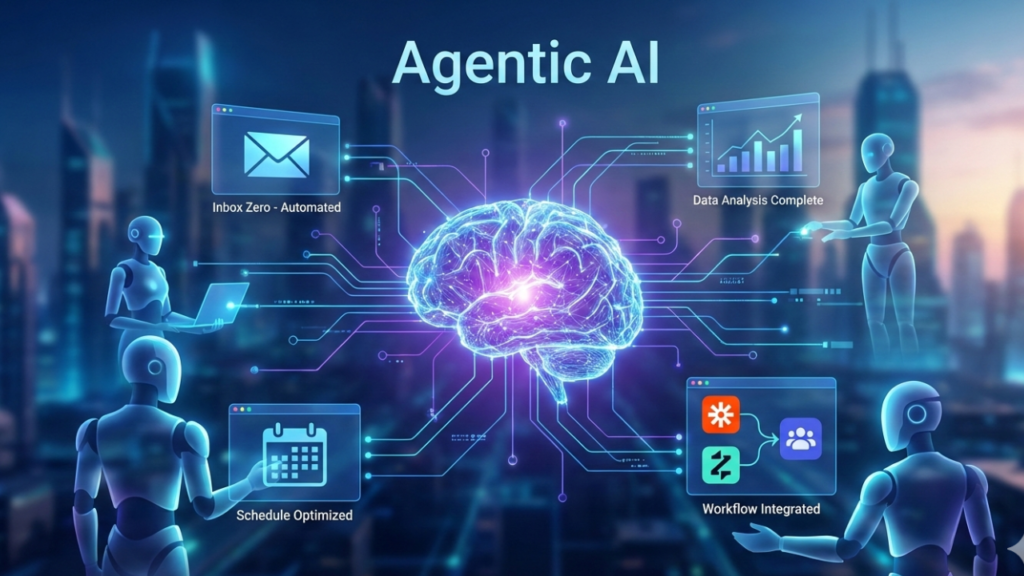
The world is entering a new technological frontier—the Agentic AI revolution. Imagine software that doesn’t just follow instructions but makes decisions, acts autonomously, and drives productivity without constant oversight. From automating repetitive tasks to optimizing workflows, Agentic AI is transforming how individuals and businesses operate.
With tools like Zapier AI agents and CrewAI automation, creating autonomous AI agents is no longer confined to researchers or tech giants. Today, anyone can build AI agents that work for you, anticipate needs, and streamline daily operations. In this guide, we’ll explore how to harness this technology and bring AI-powered automation into your life.
What is Agentic AI?
At its core, Agentic AI refers to artificial intelligence systems capable of self-directed action and decision-making. Unlike traditional AI, which relies heavily on explicit human instructions, agentic systems can:
- Analyze data independently
- Execute complex tasks autonomously
- Adapt to new situations without constant supervision
Think of it as AI with agency—software that doesn’t just respond but acts proactively.
Why Agentic AI Matters
- Time-saving: Automates repetitive tasks, freeing humans for higher-level work.
- Enhanced productivity: AI agents can manage schedules, respond to emails, and even generate content.
- Scalability: Businesses can deploy AI agents to handle workflows at scale without increasing headcount.
Example: A CrewAI autonomous agent can monitor project timelines, update stakeholders, and trigger task assignments—all without human intervention.
The Rise of Autonomous AI Agents
Autonomous AI agents are at the heart of the Agentic AI movement. These AI assistant software tools combine machine learning, intelligent automation, and AI workflow automation to perform self-operating tasks that traditionally required human effort.
Key characteristics of autonomous AI agents:
| Feature | Description |
|---|---|
| Decision-making ability | Can evaluate options and choose actions independently |
| Task execution | Performs tasks without constant human input |
| Learning capability | Improves performance based on past interactions |
| Integration with tools | Works seamlessly with platforms like Zapier, Slack, and Trello |
| Automation of workflows | Handles multi-step processes end-to-end |
By leveraging these characteristics, professionals can create AI systems that actively contribute to their productivity rather than passively assisting.
Top AI Agent Tools: Zapier AI & CrewAI
Creating autonomous AI agents has never been easier thanks to user-friendly platforms. Two of the most powerful options today are Zapier AI and CrewAI.
1. Zapier AI Agents
Zapier AI extends the popular workflow automation platform Zapier into the realm of agentic intelligence. It allows you to create AI agents that trigger workflows automatically, integrate with multiple apps, and even make decisions based on data.
Benefits of Zapier AI agents:
- Automate repetitive tasks across over 5,000 apps
- Trigger actions based on AI predictions
- Build custom workflows without coding knowledge
Example: A marketing team can set up a Zapier AI agent to monitor social media mentions, generate reports, and notify team members—all autonomously.
2. CrewAI Automation
CrewAI focuses on fully autonomous AI agents for businesses. Unlike standard workflow tools, CrewAI enables AI agents to learn, adapt, and perform complex tasks across departments.
Advantages of CrewAI:
- AI agents can manage projects, track KPIs, and handle communication
- Offers AI-powered automation for both small teams and enterprise-scale operations
- Integrates with multiple software platforms to provide seamless AI workflows
How to Build AI Agents: Step-by-Step
Creating your own autonomous AI agent might sound complex, but with Zapier AI and CrewAI, it’s surprisingly approachable. Here’s a step-by-step guide to get started:
Step 1: Define the Task
Decide what you want your AI agent to accomplish. Examples include:
- Automating email responses
- Generating content summaries
- Monitoring project progress
Step 2: Select the Right AI Tool
- Use Zapier AI for simple workflow automation and app integration
- Use CrewAI for more complex, adaptive, and autonomous operations
Step 3: Design the Workflow
- Map out each step your AI agent will take
- Determine triggers, actions, and expected outcomes
- Incorporate AI-powered decision points for flexibility
Step 4: Train the AI (If Applicable)
- Provide examples and datasets if your AI agent requires learning
- Monitor initial performance to adjust rules and parameters
Step 5: Deploy and Monitor
- Launch your AI agent
- Track its performance, and iterate based on feedback
- Scale its operations as confidence grows
By following these steps, anyone can create an autonomous AI agent that works for you, whether for personal productivity or business automation.
AI Workflow Automation in Action
AI workflow automation is where agentic AI truly shines. Imagine a typical day:
- Your AI agent scans emails and prioritizes responses.
- It updates your calendar and sets reminders for critical tasks.
- It generates performance reports from multiple sources and shares insights with your team.
- It flags anomalies or urgent issues before they escalate.
This is not science fiction—self-operating AI agents are already delivering these results for businesses and individuals.
Best Practices for Leveraging Agentic AI
- Start small: Begin with a single workflow or task to test your AI agent.
- Monitor performance: AI agents can learn, but humans must supervise in early stages.
- Integrate with existing tools: Maximize productivity by connecting your AI agents to apps you already use.
- Iterate regularly: Improve agent behavior based on feedback and performance metrics.
Future Trends in Agentic AI
Looking ahead, Agentic AI will become even more intelligent, personalized, and autonomous:
- Cross-platform intelligence: AI agents will seamlessly interact with multiple tools and environments.
- Proactive decision-making: AI agents will anticipate needs before being prompted.
- Enhanced human-AI collaboration: Humans and AI agents will work together, complementing each other’s strengths.
The future will see AI agents not just as assistants but as collaborators—AI that works for you and with you.
Conclusion
The Agentic AI revolution is here, and it’s reshaping how we work, manage tasks, and leverage technology. By leveraging tools like Zapier AI agents and CrewAI automation, anyone can create AI assistants to perform work automatically and improve productivity dramatically.
Whether you’re an entrepreneur, a team leader, or a tech enthusiast, now is the time to explore autonomous AI agents. Start small, experiment, and embrace AI-powered automation to unlock new levels of efficiency and innovation.
Call to Action
Ready to harness the power of Agentic AI?